Every business depends on infrastructure, even when customers rarely see it. Buildings, parking areas, equipment, signage, loading zones, storage systems, utilities, and transportation networks all contribute to how smoothly a company operates. These elements can influence employee productivity, customer experiences, safety, maintenance costs, and a business’s ability to grow.
Infrastructure decisions are also rarely isolated. A change to a building may affect parking. New equipment may require additional storage or electrical capacity. A new location may require different transportation arrangements. Even seemingly small decisions, such as updating signs or organizing a warehouse, can have consequences for daily operations.
Understanding these connections can help businesses make more thoughtful decisions about the physical systems supporting their work.
Start With The Business’s Long-Term Needs
Infrastructure planning should begin with a clear understanding of what the business needs today and where it expects to go in the future. A company that anticipates adding employees, expanding inventory, increasing production, or serving more customers may need infrastructure that can accommodate those changes.
This does not necessarily mean building the largest possible facility or purchasing the most equipment available. Instead, businesses can consider which resources are essential, which can be expanded later, and which should remain flexible.
For example, a growing company may need additional warehouse space, while a service-based business might prioritize conference rooms, customer parking, and technology infrastructure. Manufacturing operations may place greater emphasis on equipment access, material handling, ventilation, and utility capacity.
Understanding these priorities early helps businesses avoid making infrastructure decisions based solely on immediate needs.
Consider How People Move Through The Property
The movement of people is an important part of commercial infrastructure. Employees need to reach workspaces efficiently, customers need clear paths to entrances, and suppliers or delivery drivers may require access to loading areas.
A property should provide logical connections between parking areas, entrances, offices, warehouses, production areas, and other frequently used spaces.
Traffic patterns become particularly important for businesses that regularly receive deliveries or operate commercial vehicles. Separating pedestrian areas from vehicle routes where practical can help create a more organized environment.
Businesses should also consider accessibility. Entrances, walkways, parking spaces, and interior routes should be designed and maintained according to applicable accessibility requirements.
A well-planned property can reduce unnecessary movement and make daily operations easier to manage.
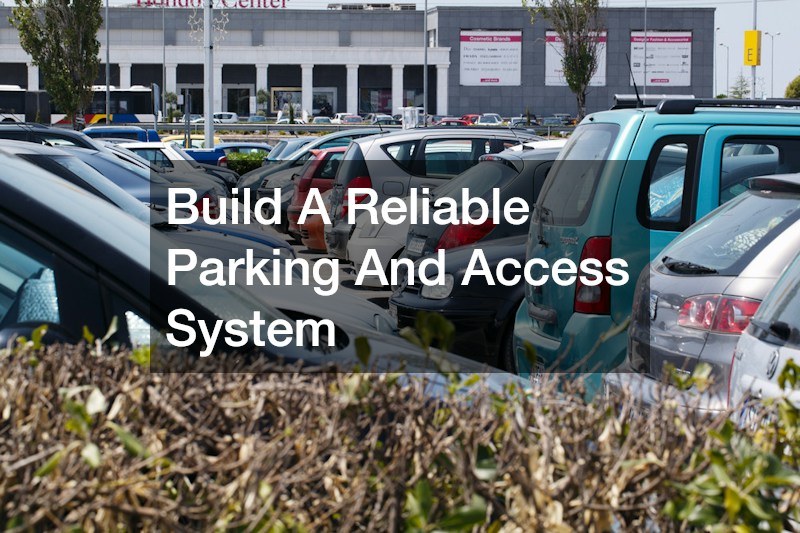
Build A Reliable Parking And Access System
Parking is often one of the first physical features customers encounter. Cracked pavement, faded markings, standing water, or confusing traffic patterns can affect how people experience a commercial property.
A parking lot paving company can help businesses address pavement installation, resurfacing, repairs, and related improvements. Maintaining the surface can also help reduce trip hazards and provide smoother access for vehicles.
Parking layout matters just as much as pavement condition. Businesses may need spaces for customers, employees, delivery vehicles, service providers, or accessible parking. The right configuration depends on the property’s size and how the business operates.
Drainage should also be considered. Water that repeatedly collects in parking areas can contribute to pavement deterioration and create inconvenient conditions for pedestrians and drivers.
Investing in parking infrastructure is therefore about more than appearance. It supports access, safety, and the practical use of commercial property.
Select Equipment Based On Actual Work
Equipment can represent a significant business investment, particularly for warehouses, manufacturing facilities, construction companies, distribution operations, and other industries that depend on physical materials.
Businesses should evaluate equipment based on the tasks it needs to perform, the available workspace, expected workload, maintenance requirements, and employee training.
Forklifts are a common example. Different models can accommodate different loads, operating environments, and lifting requirements. Businesses researching material-handling equipment may work with a CLARK forklift dealer when evaluating options that fit their operations.
Equipment selection should also account for the space where machines will operate. A forklift that works well in a large warehouse may not be appropriate for narrow aisles or areas with limited clearance.
The objective should be to match equipment capabilities with actual operational requirements rather than selecting machinery simply because it has impressive specifications.
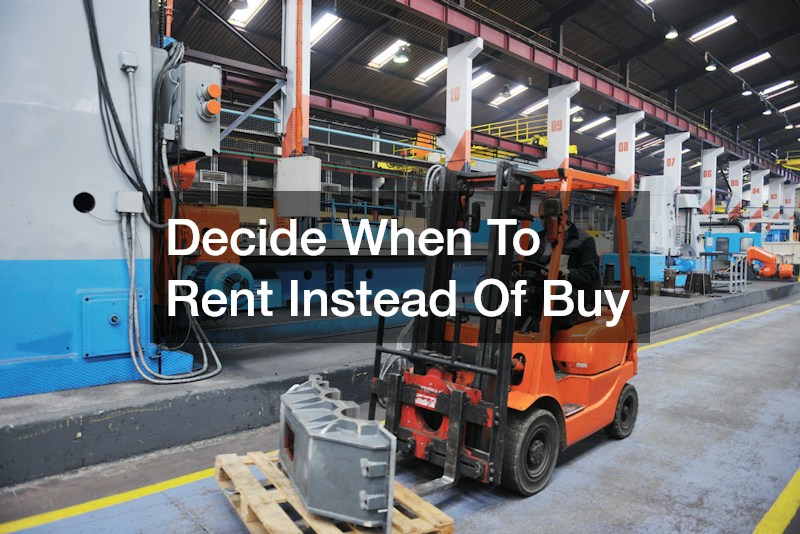
Decide When To Rent Instead Of Buy
Not every piece of equipment needs to become a permanent business asset. Some projects require specialized machinery for only a short period.
Heavy equipment rental can provide access to machinery without requiring a company to purchase, store, insure, and maintain the equipment indefinitely. This can be particularly relevant for temporary construction projects, facility improvements, excavation work, or seasonal operations.
Rental decisions should consider the expected duration of use, transportation costs, operator requirements, and equipment availability.
Businesses may also need to determine whether employees require specialized training to operate certain machinery. Safety requirements should remain a priority regardless of whether equipment is purchased or rented.
Flexible equipment strategies can help businesses respond to changing workloads without committing every infrastructure dollar to permanent assets.
Maintain Industrial Systems
Many commercial facilities depend on systems that are rarely noticed when they work properly. Pumps, compressors, generators, HVAC equipment, electrical systems, and other mechanical components can be essential to operations.
A failure in one of these systems can interrupt production or create costly downtime. Preventive maintenance can help businesses identify wear, leaks, unusual operating conditions, or other potential problems before they result in major disruptions.
For facilities that rely on industrial pumping equipment, industrial pump service can address maintenance, inspections, repairs, and other specialized needs.
Businesses should maintain records of inspections and repairs where appropriate. Tracking maintenance history can help facility managers identify recurring issues and make better decisions about replacement schedules.
Infrastructure planning should therefore account not only for installation but also for what it takes to keep equipment functioning over its useful life.
Make The Building Work For Employees
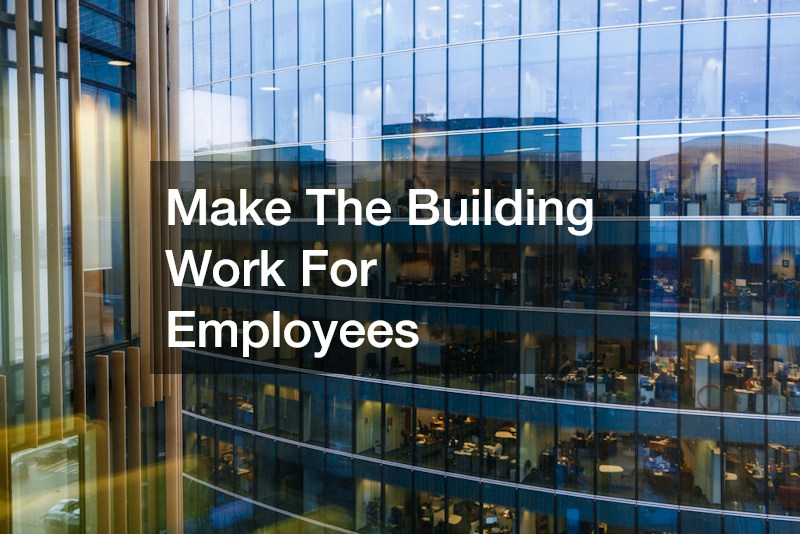
A commercial building is ultimately a workplace for the people operating the business. Infrastructure choices can affect how employees move, communicate, store materials, complete tasks, and take breaks.
Lighting is one consideration. Appropriate lighting can make work areas more comfortable and support visibility for tasks that require precision. Temperature control, ventilation, noise levels, and workspace organization can also affect the day-to-day environment.
Businesses should think about how different departments interact. If employees regularly need to move between offices, production areas, storage rooms, and meeting spaces, the building layout should support those workflows.
Break rooms, restrooms, changing areas, and other employee spaces also deserve attention. These may not directly generate revenue, but they are part of creating a functional workplace.
A thoughtful infrastructure plan recognizes that employee experience is connected to the physical environment.
Make Safety Part Of Infrastructure Planning
Safety should be considered throughout the design, construction, and maintenance of commercial spaces. Businesses need to identify potential hazards associated with their specific operations and address them according to applicable requirements.
Warehouse environments may need designated pedestrian routes, appropriate storage systems, and procedures for vehicle traffic. Manufacturing facilities may have machinery-related hazards that require specialized safeguards. Construction sites present another set of risks involving temporary structures, equipment, and changing work conditions.
Transportation is another consideration for businesses with commercial vehicles. When an accident occurs, the legal and insurance implications can be complicated. Truck accident lawyers may assist with legal matters following certain commercial trucking collisions, depending on the circumstances and jurisdiction.
Businesses should also maintain appropriate emergency procedures. Clearly marked exits, accessible emergency equipment, and employee training can help organizations prepare for unexpected events.
Use Signage To Guide People
Signs are a practical component of commercial infrastructure. They identify businesses, direct visitors, communicate safety information, and help people understand how to navigate a property.
A custom sign company can create signs that reflect a company’s branding while serving practical purposes. Exterior signs can help customers locate an entrance, while interior signs can direct visitors toward offices, restrooms, reception areas, or other destinations.
Effective signage should be easy to understand and positioned where people can see it when they need the information. Too few signs can create confusion, while excessive signage can make an environment feel cluttered.
Businesses should also review signs when their operations change. A remodeled entrance, relocated department, new parking arrangement, or updated safety procedure may require corresponding signage changes.
Think Beyond Traditional Signage
Branding can extend into smaller physical details throughout a business. Uniforms, promotional materials, packaging, displays, and other branded elements can help create consistency.
A custom patch business can produce embroidered or fabric patches for uniforms, workwear, promotional products, or other company materials. These details may be especially relevant for businesses where employees regularly interact with customers in branded apparel.
The important consideration is consistency. Physical branding should support the company’s identity without interfering with practical communication.
A recognizable visual system can make it easier for customers to understand where they are and who they are interacting with.
Plan For Changes And Demolition
Businesses rarely operate in exactly the same physical environment forever. Companies relocate, remodel, expand, consolidate departments, change equipment, and update their facilities as their needs evolve.
When a building or portion of a facility needs to be removed, commercial demolition services can help manage the process. Demolition requires careful planning because existing structures may contain electrical, plumbing, mechanical, or structural components that need to be addressed before work begins.
The surrounding property also needs consideration. Businesses may need to protect areas that will remain in use while demolition takes place.
Scheduling is another important factor. If a company needs to remain operational during renovations, demolition and construction activities may need to be completed in phases.
A carefully planned transition can reduce unnecessary disruption to employees, customers, and suppliers.
Remove Outdated Business Signs
Signage sometimes remains in place long after a business has changed. Old signs can confuse customers, create an outdated appearance, or conflict with a property’s current branding.
Commercial sign removals may be necessary when businesses relocate, rebrand, change tenants, or update exterior signage.
Removing an old sign should also involve consideration of the surface underneath it. Mounting hardware, holes, electrical connections, or other components may need to be repaired or modified.
Businesses should coordinate sign removal with the installation of replacement signage when possible. This can help maintain continuity and reduce the amount of time a property lacks essential identification.
Consider Security And Access
Infrastructure decisions can also influence how a business controls access to its property. Doors, gates, cameras, lighting, employee entrances, and visitor areas can all contribute to a company’s overall security strategy.
Different parts of a facility may require different levels of access. Employees may need unrestricted access to certain work areas, while visitors may need to remain in designated spaces.
Physical layout can help support these distinctions. For example, reception areas can provide a clear point of entry for visitors, while storage or production spaces can be separated from public areas.
Businesses should regularly review access arrangements as staffing levels and operations change. Former employees, contractors, vendors, and temporary workers may require different access permissions at different times.
Plan Infrastructure Around Growth
Infrastructure should support the business rather than limit it. A company that expects to grow should consider whether its building, parking, equipment, storage, utilities, and transportation systems can handle increased demand.
Expansion does not always require a larger property immediately. Sometimes businesses can improve efficiency by reorganizing existing spaces, upgrading equipment, improving storage systems, or changing traffic patterns.
Other situations may justify additional construction or relocation.
The key is to evaluate infrastructure decisions as part of the broader business strategy. Capital investments should support actual operational priorities while accounting for maintenance and future flexibility.
Understand The Costs Beyond Installation
The initial price of infrastructure is only part of its overall cost. Businesses also need to consider maintenance, repairs, utilities, replacement cycles, inspections, staffing, insurance, and potential downtime.
For example, an inexpensive piece of equipment may require frequent maintenance, while a more durable option could have different long-term costs. Similarly, a parking surface may look inexpensive initially but require more frequent repairs depending on materials and site conditions.
Lifecycle thinking can help businesses evaluate infrastructure more comprehensively. Instead of asking only how much something costs to install, decision-makers can consider how it will perform over several years.
This approach can also make budgeting more predictable.
Create Infrastructure That Supports The Business
The physical environment of a business is closely connected to its operations. Parking affects access. Equipment affects productivity. Building layouts affect workflows. Signs affect navigation. Mechanical systems affect reliability.
Even legal and administrative needs can intersect with physical infrastructure. For example, a business that provides certain legal or financial services may need appropriately organized client areas and secure records storage. In industries involving court-related matters, professionals such as bail bondsmen may also depend on accessible offices and clear customer-facing spaces.
These examples demonstrate why infrastructure planning cannot be reduced to construction alone. It involves understanding how people, equipment, buildings, transportation, and services interact.
Build A Foundation For Long-Term Operations
The infrastructure decisions a business makes today can influence how easily it operates tomorrow. Thoughtful planning can create facilities that support employees, customers, equipment, safety, maintenance, and growth.
The most effective infrastructure is not necessarily the most elaborate. It is infrastructure that aligns with the company’s actual needs and can adapt when those needs change.
From parking surfaces and industrial systems to equipment, signage, building layouts, and waste management, each component contributes to the larger operating environment. When these elements are planned together, businesses can create physical spaces that support reliable daily operations while leaving room for future possibilities.
A strong infrastructure strategy ultimately gives a business something valuable: a physical foundation that can keep pace with the organization it supports.